Tax Credit for Down Payment

On May 12, 2009 Cindy posted about the possibility of using the tax credit for down payment on FHA mortgages.  At that time we had shared that “We have to find out if there are any government agencies or non-profits in your area are willing to provide this financing AND if they have funds to do so.”  Since the date of the news, the US Department of Housing and Urban Development (HUD) has recalled this information and subsequently released an updated notice with the following details:

For the full letter and details you can be found on HUD’s website.

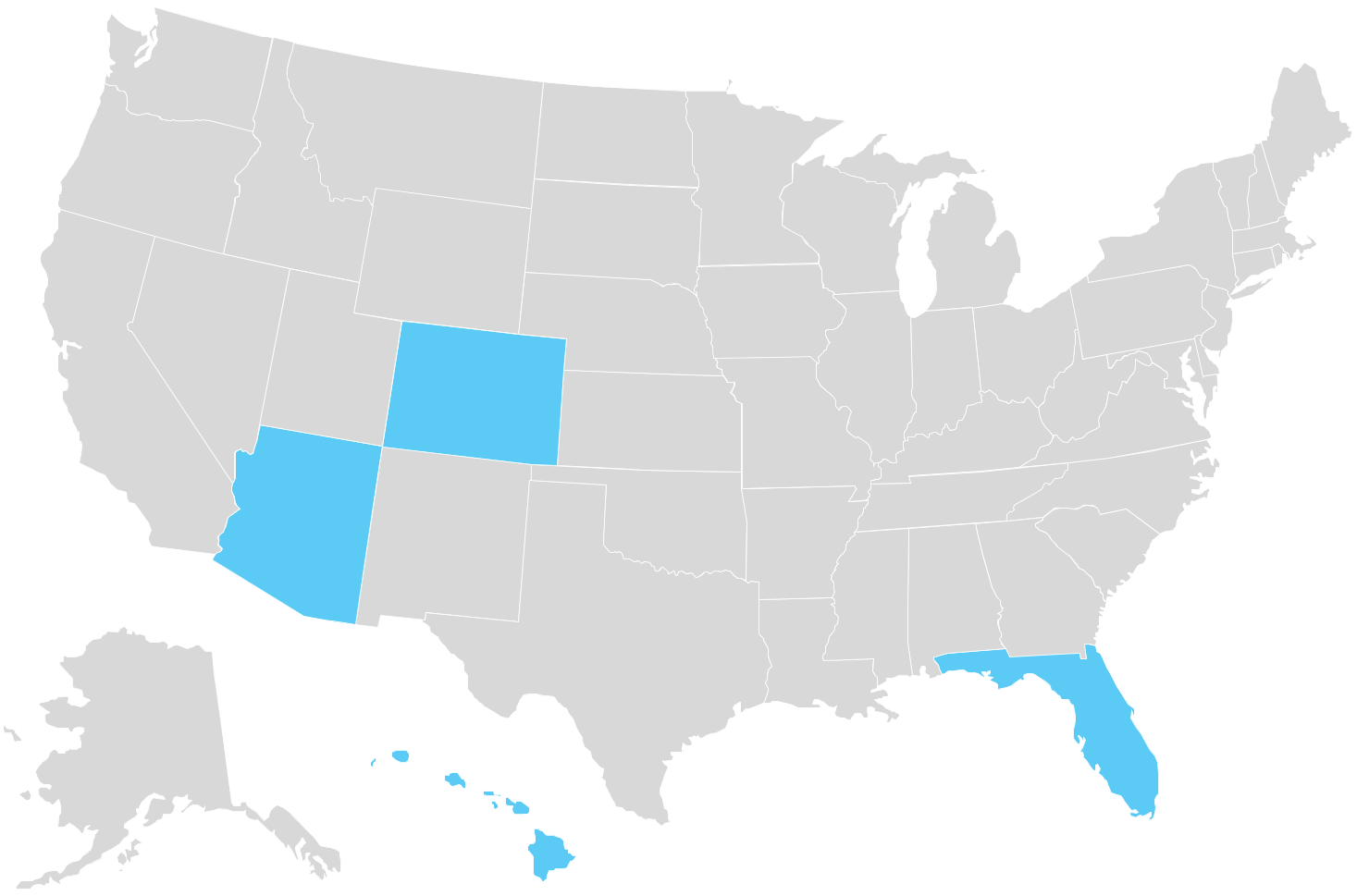
How Does this impact Colorado Housing and Finance Authority (CHFA)?

Plain and simple - it doesn’t.  Here is the eNews provided by CHFA today:

CHFA JumpStart Clarification

There has been much confusion and rumors in the past few weeks regarding the CHFA JumpStart loan program and its compatibility with FHA insurance. This confusion arose when the FHA issued Mortgagee Letter 2009-15 on May 11, 2009, then recalled it on May 12, 2009. 

Friday, May 29th, the FHA issued a new 2009-15 Mortgagee Letter clarifying its guidance on how the Federal First Time Tax Credit may assist eligible borrowers purchase a home. 

The CHFA JumpStart Loan Program complies with the FHA guidelines and is eligible for FHA insurance. 

However, there is a provision in the Mortgagee Letter that allows all FHA-approved mortgagees and FHA-approved non profit organizations, and local government agencies and instrumentalities to purchase the tax credit anticipated by the homeowner. To be clear, CHFA is not purchasing the borrower’s anticipated tax credit. CHFA is providing a second mortgage to be used for downpayment and/or closing cost assistance. CHFA encourages the borrower to use the tax credit to repay the second mortgage while in a zero (0%) percent interest deferral period. If not repaid by June 30, 2010, the CHFA JumpStart second mortgage becomes an 8%, 10 year term loan with required monthly payments. 

Because of this provision, CHFA will not approve any borrowers who have “sold” their tax credit to use the CHFA JumpStart Loan Program. These borrowers will be eligible for the CHFA HomeOpener program. 

If you have any questions about CHFA’s JumpStart or HomeOpener program please contact us.

Other Options

At this time we are unaware of any nonprofit organizations or government agencies providing second liens or tax credit advances.  As we hear anything we will be sure to update you here.

Lending A Hand

Scott Wynn

To Lock or Not to Lock Mortgage Rate


Photo provided by zert.sonstige_2008 on Flickr

Photo provided by zert.sonstige_2008 on Flickr

Anyone who was recently “floating” their rate in the hopes of another dip in rates can tell you the answer they would now have in hindsight. As they say, hindsight is 20/20.  But if only we all had a crystal ball, would we trust it or still try to out guess the market?

When you are making the decision to lock in a mortgage rate, there are several considerations.  Is the rate you are being quoted a rate you can live with?  What if it goes up .125% or .25% or as this week saw, .5%?  On $200,000 mortgage, for each .125% your payment changes only about $15 per month either direction, but .5% changes it about $62 per month.  So of course, we are all hoping that the rate drops that much before we lock, right?

Unfortunately and maybe fortunately, rates don’t typically fluctuate that much, that quickly.  When it does, it is amazing and horrible, depending on which end of the change you are on.  Lenders will sometimes be able to renegotiate a lock if the rates drop .5% or more for little or no cost to the borrower.  But, there is no going back if the rates go up and you didn’t lock.  

Are you curious what caused the big jump in rates?  We were so we found a great article on the Wall Street Journal that gave some insight into the current mortgage market.  “Mortgage rates are being pushed up in part by a steep increase in yields on long-term Treasury bonds, which have a strong influence on the cost of home loans.”  The article goes on to explain the potential impact this increase in rate will have on the economy as a whole.  The article has a somewhat pessimistic tone on the economy.  Consider where rates are at!  Although a few months old at this point, Scott’s post about rates being at all-time lows is still very relevant and provides some insight as to where we have been and where we are now. 

Bottom line, the decision is yours, but do a gut check and think how you would feel if the payment goes up because you didn’t lock. Will you still qualify for your loan?  Talk to your lender if rates drop after you locked in to see if there is a way to renegotiate for a better rate.  But be prepared to live with the decision you make.  Once you lock, for the most part, just pretend your loan closed already and you are done with the decision and be at peace with it. 

Lending A Hand,

Cindy Howeth

Mortgage Brokers vs Mortgage Bankers

Not all lenders are created equal.  Knowing the difference between the different types of lenders and how those differences impact you could save you money and provide you with more options.  Most people think of mortgage brokers when they think of talking with someone about obtaining a mortgage but mortgage brokers are only one type of lender available to assist you.

Mortgage Brokers

Mortgage brokers are individuals who originate mortgage loans with funds from mortgage banks.  Basically, mortgage brokers do not use their own money to fund your mortgage transaction but instead rely on a variety of banks to do that for them (and ultimate you).  Mortgage brokers typically have the ability to shop for the best mortgage on your behalf from the variety of mortgage banks.  Seems logical that you would hire a mortgage broker who is educated, experienced and does it every day to shop around for the best mortgage for you instead you taking the time to cal a bunch of mortgage banks and getting rate and fee quotes, right?  Well, maybe.

While mortgage brokers do have the ability to shop around for the best mortgage loan they also have relationships with certain mortgage banks that provide perks.  Some perks may include shorter underwriting time, higher income, or lower fees.  While some of these could benefit you, the buyer, they could also benefit the broker enough that they would pass up an opportunity that would benefit you to ultimately benefit themselves.  That is not always the case, but brokers are performing a balancing act to get you a good deal while still taking care of themselves (human nature, if you ask me).

The disadvantage of mortgage brokers is that they do not underwrite the mortgage approval.  The underwriting is left up to the mortgage banks to complete and notify the mortgage broker of the decision.  Similarly, the closing/funding of the mortgage is done by the mortgage bank instead of the broker.  This limits the control the broker has over the transaction.

Mortgage Bankers

Mortgage bankers, unlike mortgage brokers, fund the loans they originate with their own funding source.  Typically mortgage bankers have what is called a warehouse line.  Warehouse lines are like bridge loans, or temporary financing, that allows the mortgage banker to get a loan to fund your mortgage and then find another mortgage lender to buy that loan from them, thus paying off the warehouse lender.  This can get quite complicated and confusing, but the main idea to be aware of is that mortgage bankers fund with either their own funds or through the funds of a warehouse line.  So why is this important?

The reason that having a funding source is that the mortgage banker can maintain control over the underwriting and closing/funding of the mortgage while the mortgage brokers do not.  Mortgage bankers may have priority over the brokers who send their files to be underwritten at these banks.  Many mortgage banks have two entirely separate departments working to underwrite, close and fund broker’s mortgages and their own mortgages to eliminate this type of situation.  Mortgage bankers can, however, have more direct access to those that are working to underwrite and close their file while a broker typically has to work through a wholesale representative (sales person to get brokers to use their bank).

The disadvantage of some mortgage bankers is the potential for problems with their funding source.  Many of you probably heard about the tales of American Home Mortgage.  From my understanding, many of their customers faced situations at the closing table, ready to close on their mortgage and home purchase were left moneyless because American Home Mortgage’s warehouse line would not lend them the money necessary to fund the loan.  This situation caused many mortgage bankers to work towards obtaining two warehouse lenders, instead of just one, to avoid similar situations in the future.  

Hybrid Banker/Brokers - Correspondent Lenders

Correspondent lenders are those that are somewhere in between or, possible, both a banker and a broker.  Correspondent lenders have a funding source, typically through a warehouse line (or two, or three) but also have the ability to broker to other mortgage banks, if they so choose.  Correspondent lenders typically have agreements with larger mortgage banks to enable them to underwrite and close on behalf of that larger bank.  Here is an example:

In this situation the mortgage company funded with the own money while maintaining control over underwriting and closing knowing, the entire time, that a larger bank would purchase the loan after closing.

Let’s say that a correspondent lender decides that either there is a better opportunity for him or the customer by brokering the loan elsewhere.  A correspondent lender typically has the ability to do that, while a true mortgage banker normally does not.  The best of both worlds, right?  Again, similar to brokers, correspondent lenders create relationships, or comfort levels, with certain mortgage products and generally use those same mortgage products over and over, even if the loan officer or customer could benefit from a loan to be brokered.

For the purpose of full disclosure, I am a correspondent lender.

A State of Confusion

So now that you understand the difference from an industry point of view, I will confuse you by sharing what the State of Colorado has designated as a mortgage banker versus a mortgage broker:

Mortgage bankers are loan officers who work for a bank that has banking functions within the state such as bank branches with bankers, ATMs, etc.

Mortgage brokers are all other loan officers in the state.  Mortgage brokers, even is they have their own funding source (correspondent lenders), are required to be licensed in the State of Colorado and must abide by certain rules set forth by the state.


I hope this helps to clear up your questions about what the differences between the types of lenders are.  Here are a couple of links I found when writing this article will help to fill in certain areas I did not discuss:

Scott Wynn

Lending A Hand